
What are the features of a traditional Bedouin tent?
What Are the Features of a Traditional Bedouin Tent?
Traditional Bedouin tents are shelters historically used by nomadic communities in desert regions of the Middle East. They are known for their distinctive woven fabric, flexible structure, open layout, and ability to provide shelter in harsh desert environments. These tents were designed to support a mobile lifestyle while offering protection from sunlight, wind, and changing weather conditions.
Today, Bedouin-style tents are also used in the UAE for cultural gatherings, desert camps, tourism, hospitality, Ramadan events, and traditional Arabic seating arrangements. Their combination of heritage, comfort, and distinctive design makes them popular for both traditional and modern settings.
What Is a Traditional Bedouin Tent?
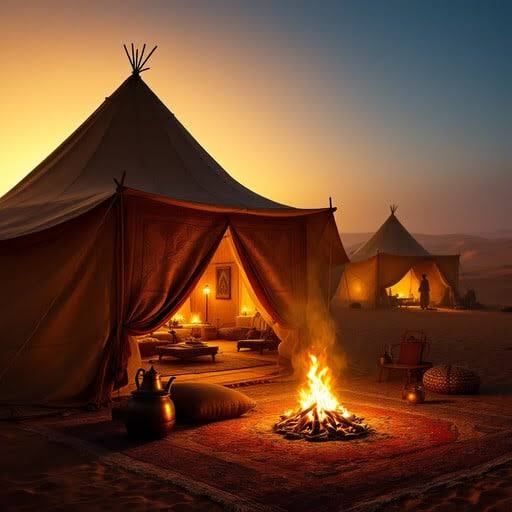
A traditional Bedouin tent, often called a Bayt al-Sha’ar (house of hair), was historically made using woven goat hair and other natural materials. It was designed to be assembled, dismantled, and transported as families moved between locations.
The structure typically featured a fabric covering supported by poles and secured with ropes. Its dark woven material, spacious interior, and practical construction helped make it suitable for desert living.
Key Features of Traditional Bedouin Tents
1. Goat-Hair Fabric
One of the most distinctive features of traditional Bedouin tents is their woven goat-hair fabric. The material was naturally available and used to create strong tent coverings.
The fabric provides several practical advantages:
- Durable woven construction.
- Protection from direct sunlight.
- Natural ventilation in dry conditions.
- Ability to respond to changing humidity.
- Traditional black or dark brown appearance.
When goat-hair fabric becomes wet, the fibres swell, making the weave tighter and helping reduce rainwater penetration.
2. Flexible and Portable Structure
Traditional Bedouin tents were designed for nomadic lifestyles. Their supporting poles, ropes, and fabric could be dismantled and transported when families moved to another location.
This flexible design made them suitable for people who needed temporary shelter rather than permanent buildings.
3. Open and Spacious Interior
The interior of a Bedouin tent was generally arranged to support family activities, hospitality, relaxation, and social gatherings.
The open layout provided space for:
- Seating and resting.
- Hosting guests.
- Eating meals.
- Family activities.
- Traditional storytelling and social interaction.
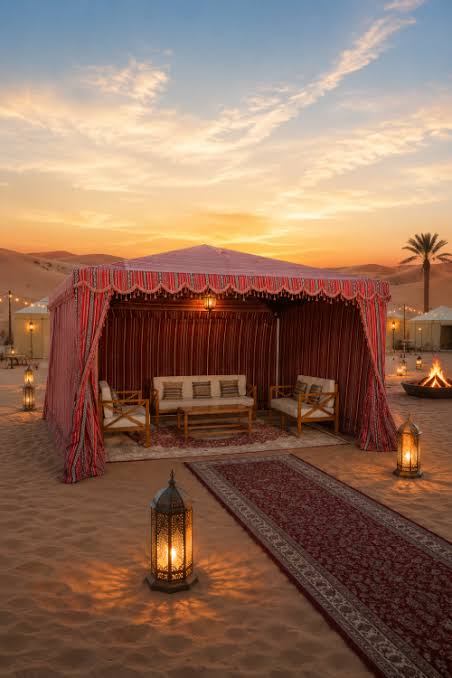
Modern Bedouin-style tents often use carpets, cushions, low seating, and decorative furnishings to maintain a traditional atmosphere.
4. Protection from Desert Sun
Traditional Bedouin tents were designed to provide shade from strong sunlight. Their fabric covering creates a shaded interior, helping reduce direct solar exposure.
The dark fabric and tent layout also provide a sheltered environment, while airflow through openings and the surrounding structure can help improve comfort.
5. Weather-Adaptive Fabric
The traditional goat-hair weave responds to changing environmental conditions. During dry weather, the weave allows airflow, while moisture causes the fibres to swell and tighten.
This characteristic helped traditional tents adapt to different desert weather conditions, including occasional rainfall.
6. Natural Ventilation
Traditional tent layouts and openings allow air to circulate through the interior. Ventilation is important in desert environments where temperatures can rise significantly during the day.
Modern versions may include additional doors, windows, ventilation panels, or cooling systems to improve comfort.
7. Cultural Design and Heritage
Bedouin tents are closely associated with Arabian hospitality and cultural traditions. Their interiors are often decorated with carpets, woven textiles, cushions, traditional coffee pots, and Arabic seating arrangements.
In modern UAE settings, these tents are frequently used to create heritage-inspired hospitality spaces for visitors and guests.
What Materials Are Used in Modern Bedouin-Style Tents?
Modern Bedouin-style tents may use traditional-inspired designs with updated materials to improve durability and comfort.
Common materials include:
- Goat-hair fabric: Used in traditional tents and heritage-inspired designs.
- PVC-coated polyester: Used in modern tents for durability and weather resistance.
- Heavy-duty canvas: Provides a traditional appearance and practical covering.
- Steel or aluminium poles: Support the tent structure.
- Ropes and anchoring systems: Secure the tent and maintain stability.
- Carpets and cushions: Used for interior decoration and seating.
The choice of materials depends on whether the tent is intended for traditional cultural use, permanent installation, tourism, or temporary events.
Where Are Bedouin Tents Used Today?
Bedouin-style tents are now used for a variety of purposes in the UAE and other Middle Eastern countries.
Desert Tourism and Safari Camps
They provide traditional accommodation and hospitality spaces for visitors who want to experience desert culture.
Arabic Majlis
Bedouin-style tents are used as outdoor majlis spaces for hosting guests, serving Arabic coffee, and gathering with family and friends.
Ramadan Gatherings
They are popular during Ramadan for iftar, suhoor, family gatherings, and hospitality events.
Cultural Events
Heritage festivals, traditional celebrations, and tourism events use Bedouin tents to create authentic Arabian settings.
Outdoor Hospitality
Hotels, resorts, and private venues may install modern Bedouin-style tents for dining, relaxation, VIP seating, and exclusive experiences.
Are Bedouin-Style Tents Suitable for the UAE Climate?
Yes, Bedouin-style tents can be suitable for the UAE climate when designed with appropriate materials, ventilation, and structural support.
For modern installations, consider:
- UV-resistant fabric for strong sunlight.
- Heat-suitable materials.
- Adequate ventilation and airflow.
- Secure anchoring for wind conditions.
- Dust-resistant design and manageable cleaning.
- Suitable cooling arrangements for summer events.
Modern PVC or canvas versions may provide different levels of weather protection compared with traditional goat-hair tents, so material selection should match the intended use.
Frequently Asked Questions
1. Why were traditional Bedouin tents made from goat hair?
Goat hair was a locally available material that could be woven into durable coverings. Its properties allowed the fabric to provide shade, airflow, and protection from changing weather conditions.
2. Are Bedouin tents always black?
Traditional Bedouin tents are often associated with dark goat-hair fabric, usually black or dark brown. Modern versions are also available in different colours and materials.
3. Can Bedouin tents be used for modern events?
Yes. They are used for weddings, cultural functions, outdoor dining, Ramadan gatherings, tourism, and hospitality events.
4. Do modern Bedouin tents have air conditioning?
Some modern Bedouin-style tents can be fitted with air conditioning, depending on their enclosure, fabric, design, and installation requirements.
5. Are Bedouin tents available in different sizes?
Yes. Modern Bedouin-style tents can be customised in different sizes, layouts, and interior arrangements depending on the location and requirements.
Conclusion
Traditional Bedouin tents are recognised for their goat-hair fabric, portable structure, open interior, natural ventilation, and cultural significance. Their design was developed to support desert lifestyles by providing flexible shelter and a comfortable gathering space.
Today, modern Bedouin-style tents continue to be used across the UAE for desert tourism, Arabic majlis, Ramadan gatherings, hospitality, and cultural events. By combining traditional appearance with modern materials and features, they offer a versatile shelter that connects Arabian heritage with contemporary needs.