
Can military tents withstand strong winds?
Can Military Tents Withstand Strong Winds?
Military tents are designed to provide temporary shelter for personnel, equipment, supplies, and field operations in different outdoor environments. They are often built with durable fabrics and strong frames to handle demanding conditions. However, one important question buyers ask is: Can military tents withstand strong winds?
The answer is yes, some military tents are designed to withstand windy conditions, but their performance depends on the tent’s construction, materials, anchoring system, installation, and specified wind rating. Not every military tent is suitable for extreme winds or severe storms.
For businesses, organizations, and outdoor operations in the UAE, understanding these factors can help when selecting a tent for temporary accommodation, storage, emergency response, or other outdoor applications.
1. Are Military Tents Designed for Strong Winds?
Many military tents are built for demanding environments and may feature reinforced fabric, durable frames, and secure anchoring systems. These features can help them remain stable when exposed to wind.
However, military tents come in different designs and sizes. A lightweight field tent may perform differently from a large modular shelter or heavy-duty military-style structure.
Wind resistance depends on several factors, including:
- Strength and design of the frame
- Quality of the tent fabric
- Number and placement of guy ropes
- Ground anchors and fixing points
- Tent shape and overall dimensions
- Quality of installation
- Wind speed, gusts, and direction
Before purchasing a tent, ask the manufacturer for its tested or engineered wind rating. Avoid assuming that a tent can withstand extreme weather simply because it is described as military-grade or heavy-duty.
2. Which Features Help Military Tents Resist Wind?
Several design features can improve a tent’s ability to withstand windy conditions.
Strong frame construction
The frame supports the tent and helps maintain its shape. Depending on the design, frames may be made from steel, aluminium, or other structural materials.
The strength of the frame, its joints, and its connections all affect overall performance. A durable frame must also be properly assembled and secured.
Reinforced fabric
Military tents may use heavy-duty canvas, polyester, PVC-coated fabric, or other materials selected for particular applications.
Reinforced fabric can help resist tearing, but fabric strength alone does not determine how well a complete tent performs in strong winds. Stitching, attachment points, and frame connections are also important.
Guy ropes and tensioning systems
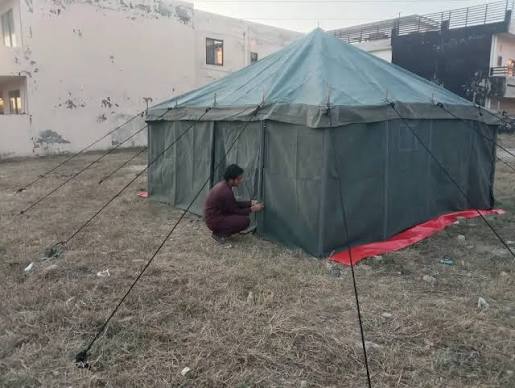
Guy ropes help stabilize a tent by distributing forces from the fabric to secure anchor points. Correct tension and placement are essential.
Loose or incorrectly positioned ropes can reduce stability, while excessive tension may damage the fabric or attachment points.
Secure anchoring
Anchors help keep the tent attached to the ground. The appropriate anchoring system depends on the soil, surface, tent design, and expected wind conditions.
For example, an anchoring method suitable for firm soil may not work well on sand or concrete. The installation team should use an approved system for the actual site.
3. How Much Wind Can a Military Tent Withstand?
There is no single wind-speed limit for all military tents. Each model has its own design, construction, and operating limitations.
Some temporary tents may be intended only for mild or moderate winds, while engineered modular shelters may have documented wind-load ratings.
When evaluating a tent, ask the supplier for:
- Maximum permitted sustained wind speed
- Maximum permitted wind gusts, if specified
- Testing or engineering documentation
- Required anchoring arrangement
- Installation conditions
- Instructions for severe weather
- Any restrictions on doors, sidewalls, or attached accessories
Wind ratings should be understood in the context of the manufacturer’s instructions. A rating may assume a particular installation method and ground condition, so it should not be applied to a different setup without confirmation.
If strong winds are forecast and conditions approach or exceed the tent’s approved limits, follow the manufacturer’s safety procedures. This may involve evacuating the tent, removing certain components, or dismantling the structure where safe to do so.
4. Does Tent Shape Affect Wind Resistance?
Yes, the shape and size of a tent can influence how wind interacts with the structure.
Some designs allow wind to flow around them more effectively, while large flat surfaces can catch wind and create substantial forces on the frame and anchors.
Important design considerations include:
Roof shape: A well-designed roof can help direct airflow and reduce areas where wind pressure becomes concentrated.
Tent height: Taller structures may be exposed to stronger winds, depending on their location and surroundings.
Surface area: Large sidewalls can catch wind and increase the load on the frame and anchoring system.
Openings and sidewalls: Opening or closing doors and side panels can change how wind moves through the structure. Follow the manufacturer’s instructions rather than assuming that opening a sidewall will always improve stability.
The best shape depends on the tent’s purpose, size, and engineering. Ask for guidance when selecting a tent for a consistently windy site.
5. Are Military Tents Suitable for Strong Winds in the UAE?
Military tents may be suitable for certain outdoor applications in the UAE, but local environmental conditions must be considered.
Some locations experience strong seasonal winds, blowing sand, and sudden weather changes. Open desert sites and exposed construction areas may have different conditions from sheltered urban locations.
When selecting a military tent for use in Dubai, Abu Dhabi, Sharjah, or other parts of the UAE, consider:
- Expected wind speeds and gusts
- Exposure to open terrain
- Ground or surface type
- Sand movement and anchor stability
- Fabric resistance to UV exposure
- Frame corrosion resistance
- Availability of professional installation
- Manufacturer-approved wind limits
For large temporary shelters, event tents, and industrial structures, professional assessment may be necessary. A tent suitable for short-term use in sheltered conditions may not be suitable for continuous installation in an exposed location.
6. How to Secure a Military Tent in Windy Conditions
Correct installation is essential for safe tent operation.
Follow the manufacturer’s instructions and use the specified anchors, ropes, connectors, and tensioning system. Do not replace approved components with improvised alternatives.
Basic precautions include:
- Choose the site carefully. Avoid exposed areas where possible and stay away from locations with falling-branch or other overhead hazards.
- Inspect the ground. Confirm that the selected anchoring system is suitable for the surface.
- Install all required anchors. Use the correct type, number, and placement specified by the manufacturer.
- Check frame connections. Make sure poles, joints, and structural components are assembled correctly.
- Inspect ropes and fabric. Look for loose connections, worn ropes, tears, and damaged attachment points.
- Secure loose equipment. Store lightweight items that could become airborne.
- Monitor weather forecasts. Follow local warnings and the tent manufacturer’s wind limits.
Do not attempt to secure, repair, or dismantle a tent during dangerous winds. Keep people away from an unstable structure and contact trained personnel when necessary.
7. What Are the Risks of Using Tents in Strong Winds?
Strong winds can create several hazards, even when a tent appears sturdy.
Tent movement or lifting: Inadequate anchoring can allow wind to move or lift the structure.
Frame damage: Excessive wind loads may bend poles, damage joints, or cause structural failure.
Fabric tearing: Wind pressure can strain seams, attachment points, and exposed fabric.
Flying debris: Nearby loose objects may become dangerous in gusty conditions.
Anchor failure: Anchors may pull out of weak soil or fail if they are unsuitable for the ground.
These risks can affect people inside and outside the tent. If weather conditions become unsafe, prioritize evacuation and follow the emergency procedures recommended by the manufacturer and local authorities.
8. What Should You Check Before Buying a Wind-Resistant Military Tent?
If you are purchasing a military tent for business, outdoor operations, or emergency use, evaluate more than its price and appearance.
Ask the supplier about:
- Tested wind rating and supporting documentation
- Frame material and structural design
- Fabric and seam strength
- Approved anchoring systems
- Suitability for the intended ground surface
- Installation requirements
- Maintenance and inspection procedures
- Warranty coverage
- Replacement parts and repair services
For long-term use, consider having the structure assessed by a qualified professional. This is particularly important for large shelters where failure could cause serious injury or property damage.
Frequently Asked Questions
Can military tents withstand desert winds?
Some are designed for exposed environments, but performance depends on their engineering, anchoring system, and approved wind limits. Confirm suitability for the specific site.
Are heavy-duty military tents windproof?
No tent should be considered completely windproof. Even a strong structure has limits and may fail if exposed to winds beyond its design rating.
Do military tents need anchors in strong winds?
Yes. Proper anchoring is essential for most tents, and the anchoring system must be appropriate for the ground and expected wind loads.
Can a military tent remain installed during a storm?
Only if the manufacturer explicitly permits use under the forecast conditions and the structure is correctly installed. Otherwise, follow the specified shutdown or evacuation procedures.
Conclusion
Military tents can withstand some windy conditions, but their ability to handle strong winds depends on their design, frame, fabric, anchoring system, and installation. Not all military tents are engineered for severe weather.
Before purchasing a tent, verify its wind rating, ask for technical documentation, and confirm that its anchoring system suits the intended location. For outdoor use in the UAE, also consider exposed terrain, blowing sand, and changing weather conditions.
Choosing a properly engineered tent and following the manufacturer’s safety instructions can help reduce risks and provide more reliable shelter in windy environments.