
Can Arabic tents be customized with traditional Emirati patterns?
Introduction
Arabic tents are an important part of traditional hospitality and cultural gatherings in the United Arab Emirates (UAE). They are commonly used for family gatherings, weddings, Ramadan celebrations, national events, and majlis settings. With customizable fabrics, colours, patterns, and interior decorations, Arabic tents can reflect Emirati heritage while providing modern comfort.
Yes, Arabic tents can be customized with traditional Emirati patterns. Customers can select traditional woven fabrics, geometric designs, decorative borders, and complementary colours to create a tent that suits their preferences and event requirements. UAE tent suppliers offer customized options for tent dimensions, interior finishes, seating arrangements, and decorative features.
What Traditional Emirati Patterns Can Be Used in Arabic Tents?
Traditional Emirati-inspired patterns can help create an authentic cultural atmosphere. The design should reflect the intended style of the tent while remaining practical for regular use.
1. Traditional Sadu Patterns
Sadu is a traditional Bedouin weaving practice associated with the weaving of textiles from materials such as wool and goat hair. Its designs commonly feature geometric shapes, repeated motifs, and decorative borders.
Sadu-inspired fabrics can be used for interior linings, cushions, seating decorations, and selected wall panels. These details help create a traditional appearance for Arabic majlis tents.
2. Black-and-White Striped Designs
Black-and-white striped fabric is a recognizable feature of traditional Bedouin tents, often associated with Bait Al Sha’ar, or the traditional tent made from animal hair.
This design can be incorporated into the outer covering or selected interior sections. Modern tent manufacturers may use suitable contemporary fabrics to reproduce a traditional appearance while meeting practical requirements.
3. Geometric Decorative Patterns
Geometric designs can add detail to tent interiors without making the overall appearance too elaborate. Repeated lines, diamonds, triangles, and borders can be incorporated into upholstery, cushions, carpets, and fabric panels.
These designs are useful for customers who want a traditional look with a clean, coordinated finish.
4. Traditional Borders and Fabric Details
Decorative borders can be added around entrances, seating areas, wall panels, and interior linings. Coordinating these details with carpets and cushions creates a consistent design throughout the tent.
Customers can select subtle borders for everyday majlis use or more decorative finishes for weddings and special occasions.
Which Colours Are Suitable for Traditional Arabic Tents?
Colour selection affects the overall appearance of an Arabic tent. The right combination depends on whether the customer prefers a traditional, contemporary, or luxurious design.
Common options include:
- Black and white: Suitable for a classic Bedouin-inspired appearance.
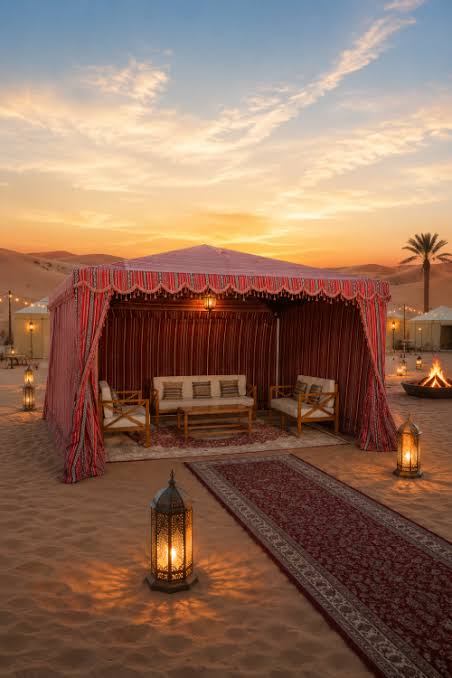
- Red and black: Can create a bold traditional look when used with coordinated patterns.
- Beige and brown: Offer a warm, natural appearance.
- Cream and gold: Suitable for elegant majlis interiors and formal gatherings.
- Burgundy and gold: Can complement decorative seating and carpets.
- Neutral colours with patterned accents: Provide a balance between traditional details and modern styling.
The colours should complement the tent’s fabric, flooring, furniture, and lighting.
How Can Arabic Tents Be Customized?
Customization involves more than choosing decorative patterns. The tent can be designed around the available space, number of guests, intended use, and desired appearance.
Tent Size and Layout
Arabic tents can be designed in different sizes to accommodate small family gatherings or larger events. The layout can include separate seating areas, entrances, and spaces for hospitality activities.
Interior Fabrics and Decorations
Customers can select suitable fabrics, decorative linings, patterned panels, cushions, and carpets. Traditional Sadu-inspired textiles can be combined with modern materials where appropriate.
Seating and Furniture
Traditional majlis seating, floor cushions, upholstered benches, and coordinated carpets can help create a welcoming environment. The arrangement should provide sufficient space for guests to sit and move comfortably.
Lighting and Modern Features
Lighting can highlight decorative fabrics and create a comfortable atmosphere. Depending on the design, additional features may include air conditioning, insulated wall panels, suitable flooring, doors, and windows. These options are available from some UAE Arabic tent suppliers.
Are Customized Arabic Tents Suitable for the UAE Climate?
Yes, customized Arabic tents can be designed for outdoor use in the UAE, but material selection and structural planning are important.
High temperatures, strong sunlight, dust, and occasional rain can affect the performance of tent materials. Customers should consider the following factors:
Fabric selection: Choose a covering appropriate for the intended use and expected weather conditions.
Heat management: Suitable insulation, ventilation, and air conditioning can improve comfort during hot weather.
Frame strength: The supporting structure should be designed for the tent’s dimensions, location, and expected environmental loads.
Water protection: Roofing, seams, and drainage arrangements should be suitable for the anticipated conditions.
Maintenance: Fabrics and decorative panels should be cleaned and inspected according to the manufacturer’s instructions.
Traditional patterns can be incorporated into the design without compromising structural safety, provided decorative materials are selected and installed appropriately.
Where Are Customized Arabic Tents Commonly Used?
Customized Arabic tents serve a range of residential, cultural, and commercial purposes.
- Family majlis: A dedicated space for welcoming relatives and guests.
- Ramadan gatherings: A comfortable setting for iftar, suhoor, and hospitality.
- Weddings and engagements: A customized venue with coordinated seating and decorative fabrics.
- National celebrations: A space that reflects local cultural identity.
- Hotels and resorts: Traditional-style hospitality areas for visitors.
- Corporate and cultural events: A distinctive setting for gatherings, exhibitions, and heritage activities.
The choice of patterns, colours, furnishings, and facilities can be adjusted to suit each application.
What Factors Affect the Cost of Customized Arabic Tents?
The cost of a customized Arabic tent depends on several factors rather than its decorative pattern alone.
Size: Larger tents generally require more fabric, structural materials, and installation work.
Fabric quality: The type, durability, and finish of the outer covering and interior textiles affect the overall cost.
Pattern customization: Specially selected fabrics, detailed decorative borders, and customized interior finishes may increase the budget.
Structural design: Frame specifications, anchoring, and site requirements influence manufacturing and installation costs.
Additional facilities: Flooring, furniture, lighting, air conditioning, and insulation may add to the total price.
Installation location: Transport, site access, setup, and dismantling requirements can affect the quotation.
To obtain an accurate estimate, provide the supplier with the required dimensions, location, intended use, design preferences, and list of additional features.
Frequently Asked Questions
Can Arabic tents be customized with Emirati Sadu fabric?
Yes. Sadu-inspired fabric can be used for interior linings, cushions, decorative panels, and other suitable areas, depending on the tent design and material availability.
Can I choose my own colours and patterns?
Many UAE suppliers offer customization of colours, patterns, fabric, and interior decoration. Confirm the available options with your chosen manufacturer.
Can traditional patterns be combined with modern designs?
Yes. Traditional textiles and geometric patterns can be combined with contemporary lighting, modern furniture, and practical interior finishes.
Are customized Arabic tents suitable for permanent installation?
Some Arabic tent structures are designed for longer-term use, while others are intended for temporary events. The structure, materials, foundations, maintenance requirements, and relevant approvals should match the intended installation.
Can Arabic tents include air conditioning and lighting?
Depending on the design, Arabic tents can include air conditioning, lighting, electrical fittings, and other comfort features. These should be planned during the design and installation process.
Conclusion
Arabic tents can be customized with traditional Emirati patterns to create spaces that celebrate local heritage while meeting modern requirements. Sadu-inspired textiles, black-and-white stripes, geometric motifs, decorative borders, and coordinated colours can all contribute to an authentic appearance.
For customers in the UAE, the best design combines cultural details with durable materials, comfortable interiors, suitable weather protection, and a structure appropriate for its intended use. Discussing these requirements with an experienced tent supplier can help you create an Arabic tent that suits your space, budget, and event.